Welcome!

This blog has moved to my new art/creativity site (Mouse House BLOG). The new blog is also about getting you connected with nature for creative expression, along with my art, workshops, and my personal journey.

Please feel free to explore past posts here, some of which will re-appear for encore showings in Mouse House. Let nature be your muse...

Thank you for visiting Your Nature, and if you like what you read here, be sure to follow my blog at its new home, to continue to receive creative fun and inspiration in your mailbox!

Wednesday, July 20, 2011

Pop-Up Poetry

I recently led a Pop-Up Poetry workshop at one of my favorite nature spots, the Whitewater Preserve. Planted in a lush canyon, surrounded on both sides by a high-walled canyon we fine-tuned our observation skills and enjoyed a word gathering walk, writing poetry, and applying alternative sources of inspiration for writing poetry--just through paying attention to our surroundings in nature and allowing poety to "pop up" around us.

Even if you think you don’t have a poetic bone in your body, opening up to these creativity exercises just may surprise you when your inner poet emerges in response. Grab a notebook and a pen and give these ideas a try:

Poetry Path. Take a walk in a natural area with a particular theme in mind, like sounds, blue, textures, patterns etc. Write poem notes (phrases) that describe your chosen prompt which you can use in a complete poem or other writing later. For example, using the prompt “sounds:”
  • Describing the sound of wind in the trees interrupted by squirrels chattering: I heard an animated conversation above me, the voices of the leaves chattering with the wind about the squirrels.
  • Hearing a stream before I saw it: Somewhere beyond the moss the muffled voice of a stream tells old stories to wide-eyed boulders and fallen trees. From this phrase, I tried a version of haiku (5-7-5 poem about nature):

          Beyond the soft moss
          A stream tells old stories to
          hushed, wide-eyed boulders.


Word Gathering. One of the exercises we did as a group was a word gathering walk. For about 15 minutes we walked around the preserve collecting words in our journals directly inspired by everything we encountered. Just words. I suggested participants write any phrases on a separate page. Keep only words on your page. As a group we then exchanged our lists, using someone else’s words to write a poem (returning original lists when done). (Sources: Creating a Word List from Your Nature blog; Word list exchange idea from Liz Lamoreux’s book "Inner Excavation: Explore Your Self Through Photography, Poetry, and Mixed Media")

But if you’re going solo, a great alternative is to cut up your individual words and choose ten of them to arrange directly into a 10-word poem or randomly pick five of your words to use as inspiration in a poem. (Random 5 from Bowl of Random Words at The Odd Inkwell blog) 

Here’s a partial list from a word gathering walk by someone who does not think they are a poet; a reluctant poet: hot, green, soft, crunchy, bark, tree, leaves, water, wet, summer, season, chirping, wings, flight, laughter, blank, falling. See below for their Fallen Poem.

Sensory Overload. Still think you don’t have it in you? Embrace your descriptive words! Take any object and write down at least 5 words or phrases to describe it in detail. Try descriptive words that address your senses (sight, sound, smell, touch, taste) as a guideline. For example, "nest"--downy shelter, wet feathers, warm scent, peppery insects, tiny, hungry calls.

NEST
newly hatched, wet feathers
shifting with anticipation
stretching, reaching
tiny, hungry calls
the warm scent of peppery insects
lands softly
within the downy shelter
feeding time.

Wishy-Washy and Fallen Poems. Creating ephemeral poems can be a great incentive for putting anything down “on paper,” even those poems you think are…well not so great. Just as long as you keep working your poetry muscle. From mistakes come creative masterpieces…

Wishy (rain) Washy: how about Molly Anderson-Childers & Chris Dunmire’s suggestion of chalking a bad poem on the sidewalk and praying for rain! (from Jellybeans for Breakfast: A Guided Imagery on Play)

Fallen Poems: collect a few fallen leaves (not too crunchy) and write bad haiku on them followed by adding them to your garden as mulch—veggies and flowers eat up poetry! Or better yet, leave a lucky stranger your spontaneous prose or a poem note written directly on a leaf inspired by fall leaves, the surrounding scenery, or the tree your leaf came from, leave it on their windshield as an unexpected word gift. (Adapted from "leaf tweets" from my article, Let Nature Be Your Muse--9 Activities to Boost Your Creativity)

The “reluctant poet’s” Fallen Poem:  
 
Chirping and soft wings. Laughter in flight.


Thursday, June 16, 2011

World Turtle Day

Hello creatives! Today is World Turtle Day. Please share something you've written or created that celebrates these beautiful creatures...

I'd like to share with you a poem I wrote inspired by these sea turtle images (and their fellow endangered cousins, the desert tortoise). I hope they inspire something in you.


Untitled

I watched a tortoise investigating dried indigo upon the flat,
varnished cobbles of desert pavement.
It was not as easy for me on the other side of this shimmering lens of heat, baking off the ancient patina.
I wiped my neck and brow.

This endangered creature, in her element, began nibbling the dried,
crunchy indigo bits that littered the parched ground at the base of the plant.
Like a mirage, I watched her easily cut through old, white stems
as she moved her snacking onto the plant itself somewhere within my wavy vision.

I finished off my water. The heat continued to radiate, relentless and heavy.
The tortoise started to glide, effortless, weightless.
Quietly she pushed forward in an unexpectedly fluid movement, rising above me.
She became sleeker. I noticed a glittery cloud of mica dust slowly billow off her carapace.

I stood up to watch her dance a slow, liquid ballet in an endless cerulean sky.
The sun sparkled down in distorted waves creating a halo around her graceful silhouette.
She dove slowly, circling me, investigating me. Both of us floating in mutual curiosity.
I felt a tiny current of movement, the faint tip of a claw brushing my shoulder.

I turned to see her flat plastron arcing into a graceful twist away from me.
I reached for her, wanting to follow in her world of ancient survival--
but she settled out of reach onto the dark floor, resting between veils of dual existence.
I felt a salty droplet fall to my lips.
I wiped my forehead.

~M. Hedgecock


Monday, June 13, 2011

Floating Mandalas

Fuchsia bougainvilla bracts, aloe
vera seed pods, and honeysuckle
leaves.
This weekend I offered an ongoing workshop for the Whitewater Preserve's  2nd Annul Water Celebration, where participants created beautiful floating mandalas made with natural items. Using stems, sticks, leaves, petals, and blossoms visitors arranged these colorful plant elements in a variety of patterns and designs to create their own, wonderful floating mandalas. Mandala creators of all ages enjoyed this relaxing activity throughout the day.

A traditional mandala is an ancient circular design which typically represents the universe. It can also be a symbolic expression to connect with the self. For our mandalas, we were hoping participants would connect with their creative self through nature.

Definitely try this at home! All you need is a bowl of water, small dish towel for clean up, plant clippers or scissors, and some plant material from your yard like: flowers (to keep whole or for petals), leaves, sticks, seed pods, lightweight bark, etc. Experiment with different ways to use your materials, some of our participants ripped up petals into tiny pieces of "floral confetti" that added a delicate touch to their designs. Sticks were used in many different ways to add visual lines, accents, floral rafts, bridges, barriers and more in many designs.

Here are the mandalas created by my family and myself, plus some other favorites from the 40+ participants throughout the day (to see all the beautiful mandalas created visit this album):

I love my husband's traditional spoke 'n wheel style
mandala using whole roses and stems.
A beautiful huge lily is the center of the universe in
in this participant's dramatic design.

I love the layering in this delicate mandala and
how its creator used color, texture, and tiny
flowers resting on floating petals in this personal
expression.
 
My son (4 yrs. old) created this and three other rather
lovely mandalas!

I decided to use sticks and stems as a raft which
made it easier for me to keep flowers in place, plus...
I really loved the simplistic look that resulted!

Another beautiful creation by a workshop participant,
I really like the way the bright yellow ray flowers
(petals) pop around a huge orange rose, on a bed of
red petals, accented with those bright green leaves.

What one word describes the way I feel after
creating a floating mandala? Peace.

For more images please visit this album.

Saturday, May 28, 2011

Creativity Sit-Spot

Create a unique sit-spot in your yard this weekend for mental decompression or as an “action spot” for creative inspiration. Be sure to include elements that truly inspire you through fragrance, sounds, textures, sight, light, framing, comfort.

Think of different ways to honor your secret spot and creative spirit. Are you inspired by the moon? How about creating something that comes alive for you under the light of the moon, with night blooming plants, intoxicating scents, or by using white paint for designs that will luminesce under its full strength.

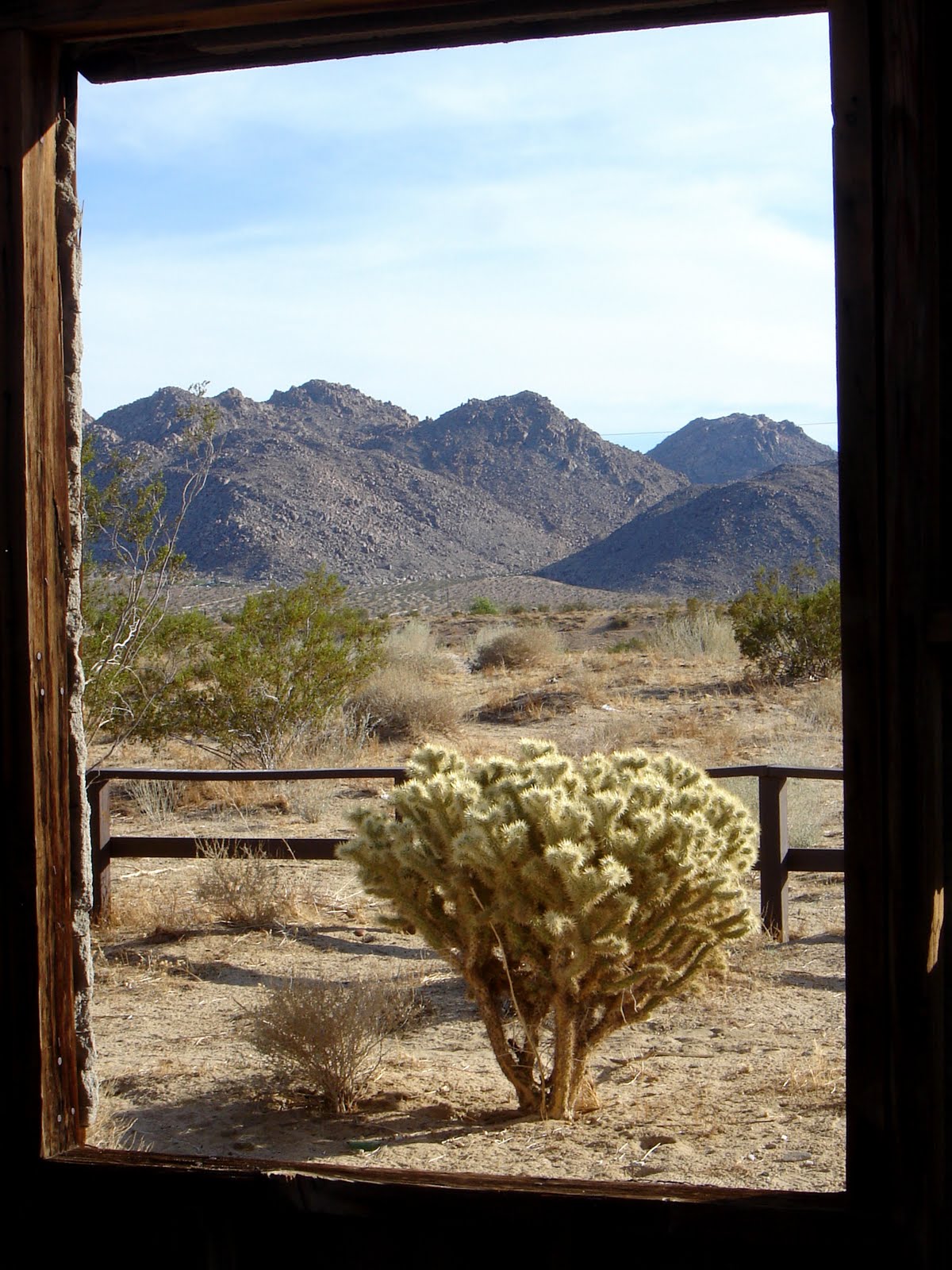
Use an old window frame to frame out a favorite view from your yard, an everchanging photograph. How about a rocky hide-away with a poetry journal stashed in a hidden a crevice? Lose yourself in a small winding path to your favorite hammock. Keep a can of chalk handy on a designated garden wall or a large boulder for bouts of spontaneous art or journaling. Find inspiration in a bottle garden with glass in different colors, textures, reflections.

Keep it playful or relaxing, sensationally secretive or accessible and inviting, full of suprises or simple and clean. Create a creativity sit-spot that you can't wait to get to because it feels inspiring!

Monday, May 2, 2011

Stained Glass Window Exercise

Try this! Take a photo and a thick black felt pen (Sharpies® work great) and outline the main shapes. Your goal is to get down to a minimum number of shapes. Try to integrate shapes by overlooking small details. This exercise will raise your awareness of different shapes (size, orientation) and the way they interlock. (from Benoit Philippe's Creative Exericises for Artists and Everyone Else)

You can easily complete a number of these in just a few minutes. Use this exercise to experiment with and transform your favorite nature photograph into a fun, embellished mixed media piece.
Mixed media w/original Sharpie pen exercise,
embellished w/soft pastels, glass beads--and
possibly later w/some found text.
(Original photo by Alexandra J. Sheldon)


Wednesday, March 30, 2011

Paint Chip Inspiration

If you ever need a quick muse, go straight to your nearest paint or home improvement store and peruse the paint chips. With endless hues offering such descriptive names like Rocky Slope, Deep Cavern, Lightening, Painted Desert, and Monarch Wing, you can find yourself inspired by nature while standing in the middle of the paint aisle.


A random handful of paint chips can
get the imagination flowing. Try con-
necting a bunch of paint color names
in stream-of-thought story or poem:

I was beachcombing upon our Mother
Earth during the solstice. I noticed a
shimmering seashell and at the same
moment I saw lightening out across
the ocean deep. I ran toward the
seashell just inside the mouth of a
deep cavern, protected now from a
thunderous downpour. I watched my
seashell, as it lay on the sand, alight
into a calcite butterfly with each
pulse of lightening.
Pick a few paint chips that grab you and use those to write a few lines of poetry, or a detailed setting for a fictional piece, write a song, or use them to inspire your next painting or altered art piece. Recently we used paint chips during our Photo Safari creativity workshop by randomly chosing a paint chip color and then matching that color to something found in nature.

You can reverse these prompts by blending your own colors, creating a nice palette on your paper then coming up with descriptive “paint chip” names of your own.

Nature and inspiration are all around you!


The paint chip color "Cottontail" was the muse for this
little acrylic/pen & ink ATC.

Friday, March 25, 2011

I Heart Nature


Two hearts, almost a triple heart if you were to turn it on its side.

 
I love this doube heart rock my mom brought back from a trip up the northern Californian coast. I am always looking for hearts in nature, along with other common shapes, faces too, and letters--little serendipitus gifts from Nature that seem like offerings to connect to my world when I am always seeking to connect to hers.

Whether it's the search or the actual treasured finds that delight, it is always a treat to make these discoveries of the "familiar" in a sometimes less than familiar environment. I like to believe these discoveries, along with feeling a secret connection with something special just for you, is one of those magical ways in which Nature can appear as a most unexpected muse.

Go outside and look for your secret gift. It may be waiting for you at night or during the day, in the rain, on a beach, or desert path. Enjoy the mini-journey :)


Share This